Description
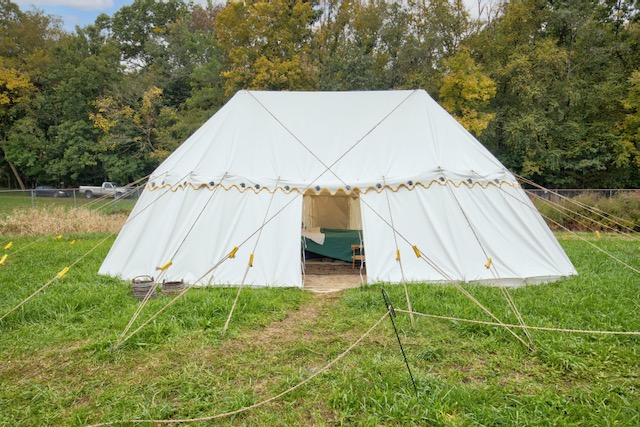
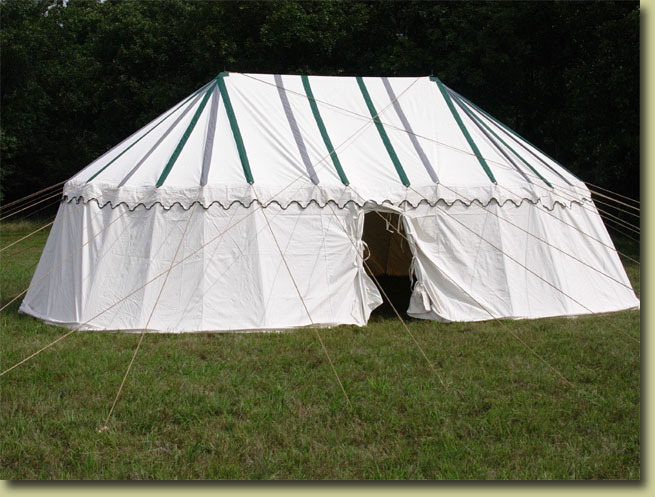
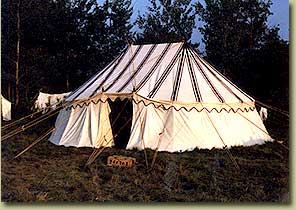
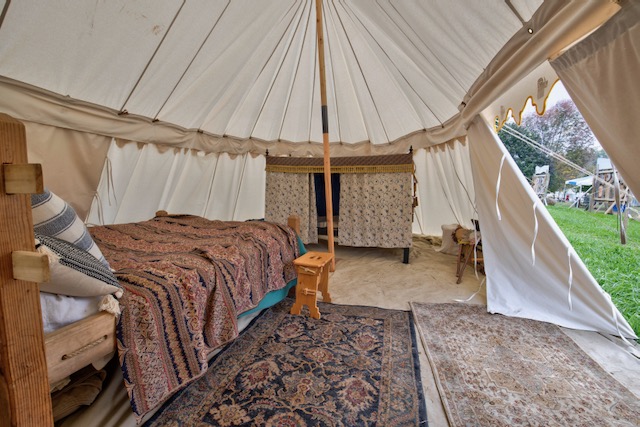
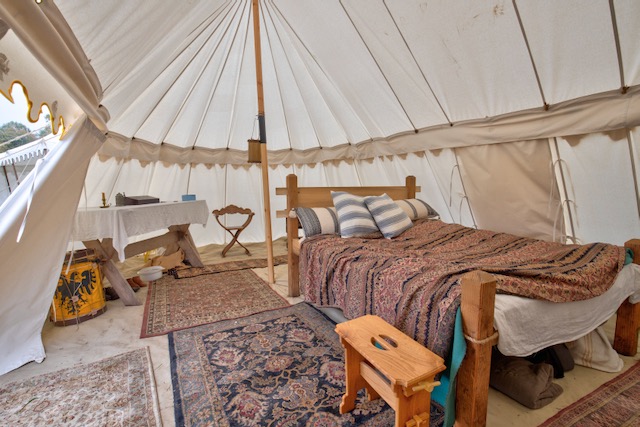
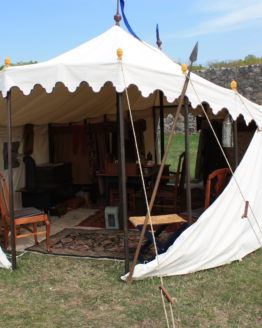
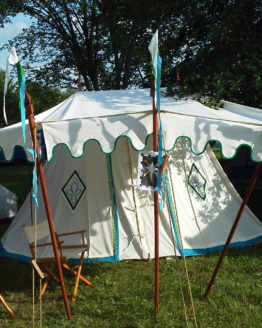
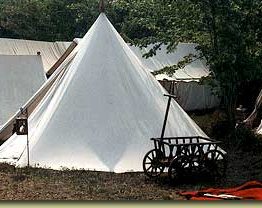
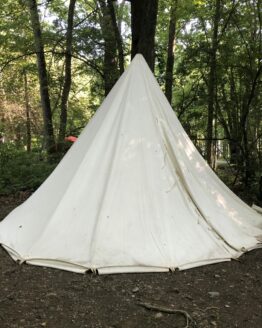
Absolutely the most beautiful tent standing anywhere! We are very proud of the marquees we build. It is unnecessary and not authentic to use perimeter poles. There are no contemporary illustrations that show perimeter poles in use until the 1820s. The whole idea behind a Round End Marquee was to maximize space and strength while decreasing the transportable baggage. Only two vertical poles and a ridge are needed.
While most builders have added the perimeter poles, they have done so at the expense of roof angle. Early tents were tall with steeply sloped roofs. This design allows rain to drain quickly, guy lines to be shortened and, most importantly, the tent to withstand tremendous wind loads. (Tall walls with a shallow roof pitch produces a tent with an airplane wing effect-when the wind blows lift is created which raises the tent off its poles — with potentially disastrous results. There are no historical examples of these newly designed, flattened roofs.)
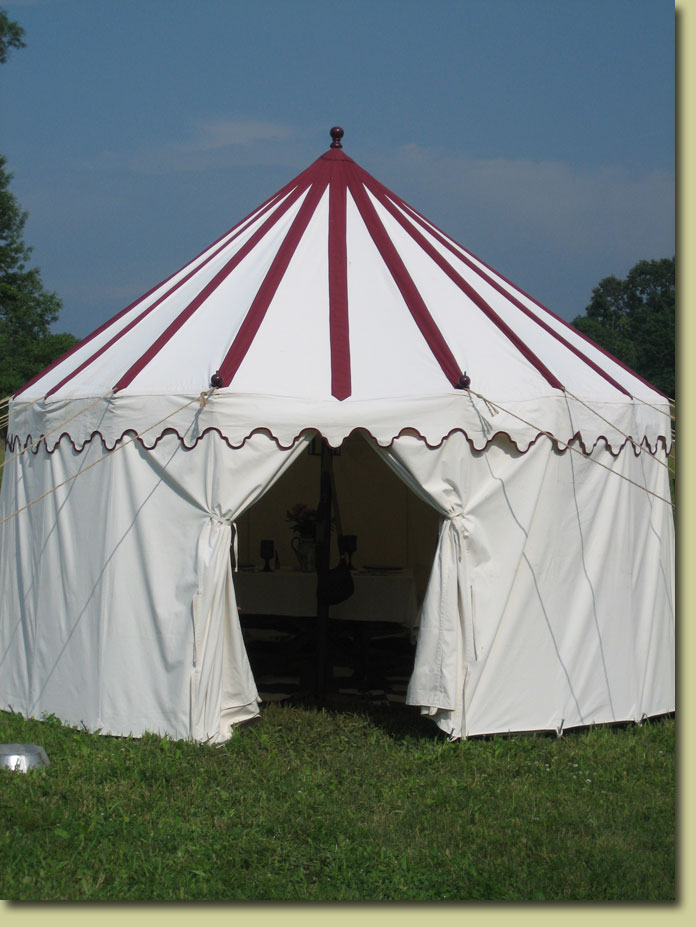
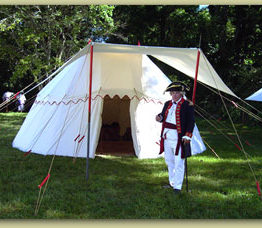
Marquees can be found throughout history to have both straight and slanted walls. Apparently, although straight walls can be found during the 18th century, they gained prominence in the early 19th century. Slanted walls are shown in many medieval camp drawings and fairs. The military, in both Europe and America through the French and Indian Wars, were documented as using the slant wall as it took up little more baggage space while giving much more usable floor space.
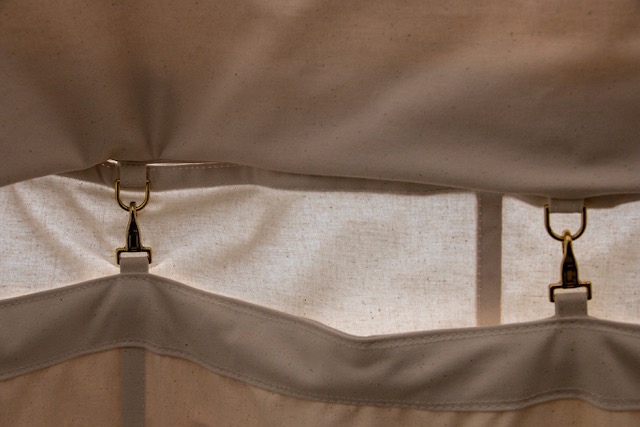
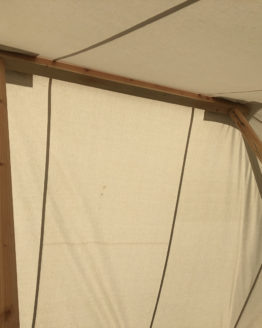
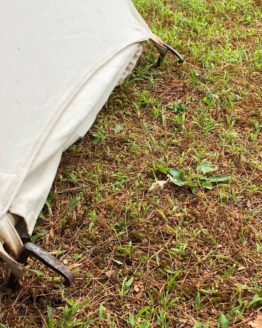
Our marquee walls are standard with “D” rings and snap hook suspension systems. The walls are hung between the outside scalloped valance and a straight interior valance. This technique hides the modern snaps while making the junction weatherproof. We do have a supply of wooden toggles to replace the steel snaps and “D” rings. These authentic components add greatly to the appearance of the interior of your tent. Contact us if you have an interest in this option.
Mud flaps are standard on all marquees. Doors are a full panel overlap (approx. 34″) and are placed in the center of the longest sides. All marquees are built to be suspended from guy lines but will accommodate perimeter poles with no modification necessary.
Slanted walls gain about 18″ so footprints of tents are roughly 3′ larger. All specifications may be altered for a truly custom tent. Call us and let us know your needs.
Unless otherwise noted, Tentsmith tents are made out of 10 oz. white Sunforger – mold and mildew resistant canvas.
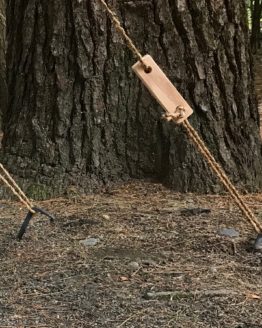
All PRODUCTS ARE “CANVAS ONLY”. YOU WILL NEED POLES, ROPES, AND STAKES TO SET UP YOUR TENT, WHICH CAN BE PURCHASED SEPARATELY.
Reviews
There are no reviews yet.